Decade
The best French films of the 1940s
Films made under the Occupation, and the first films of a free France after 1944.
By Eleanor Hale
From June 1940 to the summer of 1944, French cinema worked under German occupation. American films were banned, many Jewish artists had to flee or hide, and a German-controlled company, Continental Films, produced films in Paris. Against all odds, the period produced some of the most beautiful films in French history, often escapist fantasies or historical dramas that avoided the present. After the Liberation came settling of scores, a flood of American films that had been held back for years, and a new generation of directors.
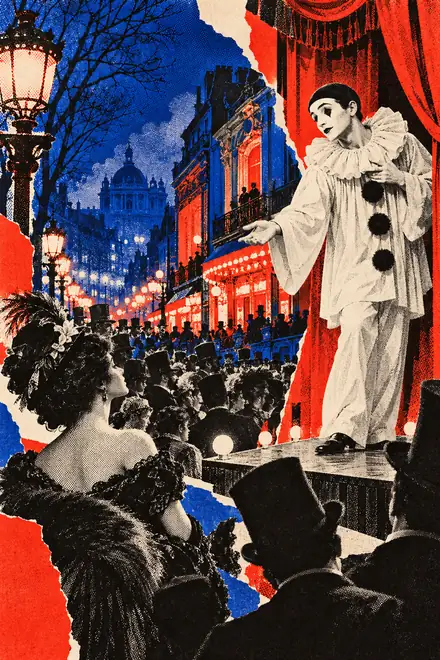 Romantic dramaLes Enfants du paradisMarcel Carné · 1945
 Historical dramaMonsieur VincentMaurice Cloche · 1947
Remorques (Jean Grémillon, 1941)
Gabin as the captain of a tugboat in Brittany, torn between his dying wife and a woman he rescues at sea, played by Michèle Morgan. Begun before the defeat and completed under the Occupation.
Les Visiteurs du soir (Marcel Carné, 1942)
A medieval fable in which the Devil sends two envoys to a castle to sow misery, and love resists him. Carné and Prévert's escape into the past under the Occupation.
Le Corbeau (Henri-Georges Clouzot, 1943)
Poison-pen letters signed "The Raven" tear apart a small provincial town. Made for Continental Films, it was attacked from all sides, and Clouzot was briefly banned from working after the Liberation. Today it is seen as a masterpiece of suspicion.
Goupi Mains Rouges (Jacques Becker, 1943)
A dark rural comedy about a clan of peasants in the Charente, all called Goupi, and a family treasure. Becker's second feature and one of his best.
Les Enfants du paradis (Marcel Carné, 1945)
A courtesan and four men in the theatres of 1830s Paris. Shot during the war, released after the Liberation, and often voted the greatest French film.
Les Dames du bois de Boulogne (Robert Bresson, 1945)
A woman's elaborate revenge on the lover who left her, with dialogue by Jean Cocteau. Bresson before he abandoned professional actors.
La Bataille du rail (René Clément, 1946)
The Resistance among railway workers, filmed with real railwaymen in a near-documentary style. A celebration of the Resistance made just after the war.
La Belle et la Bête (Jean Cocteau, 1946)
Cocteau's fairy tale, with Jean Marais as the Beast, living arms holding candelabras and a castle full of magic. Still enchanting.
Monsieur Vincent (Maurice Cloche, 1947)
Pierre Fresnay as Saint Vincent de Paul, organising charity in 17th-century France. Winner of an honorary Academy Award.
Quai des Orfèvres (Henri-Georges Clouzot, 1947)
A music-hall singer, her jealous husband and a murder investigated by Louis Jouvet's weary police inspector. Clouzot's return after his ban.
Jour de fête (Jacques Tati, 1949)
Tati's first feature: a village postman tries to deliver the mail as fast as the Americans do. Mostly visual comedy, set on a fair day.
Le Silence de la mer (Jean-Pierre Melville, 1949)
A German officer billeted in a French house during the Occupation speaks every evening to an old man and his niece, who answer with silence. Melville's first feature, made independently.
Where to go next
The 1950s brought the cinema of quality, then the critics who attacked it. See the best French films of the 1950s, or go back to the 1930s.